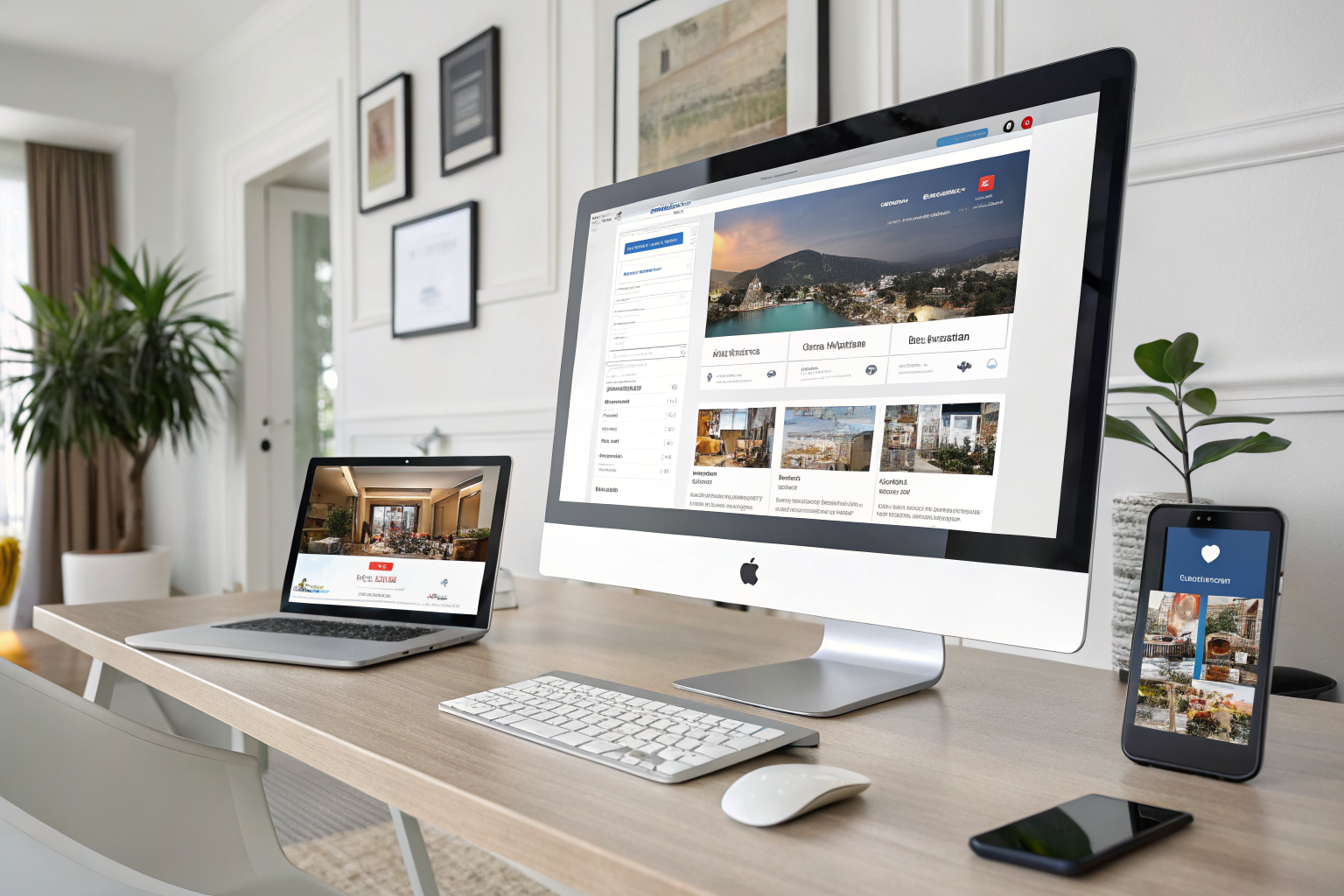
When operating hotels, restaurants, bars, or other hospitality businesses, attracting and retaining guests requires more than excellent service and a prime location. Success demands a strong online presence — because that's where potential customers are actively searching for accommodations and dining options before they ever consider making a reservation.
Digital marketing in hospitality uses online tools and strategies to promote hotels, restaurants, and hospitality services — through content creation, social management, website optimization, and advertising — to attract and meaningfully engage guests.
Why Hospitality Digital Marketing Matters
Guest discovery happens primarily through digital channels today. A strong hospitality digital marketing strategy delivers across every stage of the guest journey:
- Visibility: Ensures your business appears in guest search results at the precise moment they're looking for what you offer.
- Engagement: Builds authentic connections through social platforms, email, and website experiences that resonate with your audience.
- Trust: Reviews and quality content establish credibility before guests have any direct contact with your property.
- Direct Bookings: Reduces dependency on third-party platforms and their commission costs, improving your revenue margins.
- Competitive Advantage: Differentiates your property from competitors who rely solely on OTA listings and word-of-mouth.
Digital marketing creates relationships before guests arrive, transforming advertising spend into meaningful connections that drive repeat stays and referrals.
Key Components of Hospitality Digital Marketing
Website Optimization
Your website is your digital storefront and the hub of your entire marketing ecosystem. It must be easy to navigate, mobile-responsive, and fast-loading with clear calls-to-action that guide visitors toward reservations. A slow, confusing site undermines every other marketing effort you make.
Search Engine Optimization (SEO)
Using location-specific keywords throughout your website content helps potential guests discover your business through organic search. Local SEO — including Google Business Profile optimization — is particularly powerful for capturing guests who are actively searching for options in your area.
Social Media Marketing
Platforms like Instagram and Facebook let you showcase your property, cuisine, and guest experiences through engaging visual content. Consistent posting builds brand recognition and gives prospective guests a window into what their stay will feel like before they book.
Email Marketing
Building a subscriber list creates a direct, owned channel to your audience. Regular newsletters featuring promotions, seasonal updates, and personalized messaging keep your property top-of-mind and drive repeat bookings from guests who already know and trust your brand.
Online Reviews & Reputation Management
Encouraging satisfied guests to leave reviews — and responding professionally to all feedback — builds the social proof that influences booking decisions. Your rating on TripAdvisor, Google, and Booking.com is often the deciding factor between you and a competitor.
Paid Advertising
Targeted ads on Google and social platforms reach specific audience segments with precision that organic content cannot match. Paid campaigns are especially effective for filling occupancy gaps, promoting seasonal offers, and capturing high-intent searchers ready to book.
Building Your Hospitality Digital Marketing Strategy
A successful strategy isn't built overnight — it follows a structured process:
Step 1
Define Clear Business Goals
Know whether you're targeting direct bookings, brand awareness, or loyalty before selecting any channels or tactics.
Step 2
Research Your Audience
Understand your ideal guest demographics — their age, travel motivations, booking behavior, and where they spend time online.
Step 3
Select Appropriate Channels
Not every platform fits every property. Choose channels where your target audience is actually active.
Step 4
Develop Quality Content
Create content that showcases your unique strengths — professional photography, compelling copy, guest stories.
Step 5
Measure with Analytics
Track performance using Google Analytics and platform-native tools. What gets measured gets improved.
Step 6
Maintain Active Engagement
Respond to comments, reviews, and messages consistently. Engagement signals to guests that real people are behind your brand.
Practical Tips for Hospitality Businesses
- Implement local SEO strategies so guests in your area find you first
- Amplify user-generated content from your guests — it's more credible than branded content
- Offer website-exclusive discounts to drive direct bookings over OTA reservations
- Create virtual property tours to give guests confidence before they book
- Partner with local influencers whose audiences match your target guest profile
- Maintain accurate, consistent business information across all online platforms
Hospitality digital marketing requires consistent effort and ongoing optimization — success emerges through testing, refinement, and alignment with your property's unique value proposition. The businesses winning online aren't doing everything; they're doing the right things consistently.
Jim McGinnis
Founder, Digital Hospitality Marketing — helping hotels and restaurants maximize their brand ROI through expert digital strategies.
Ready to Build Your Hospitality Digital Strategy?
Let's create a complete digital marketing plan tailored to your property and guest profile.