Hotel Marketing Trends to Watch in 2026
Explore the hotel marketing trends defining success in 2026 — AI-powered personalization, virtual reality tours, and eco-friendly digital strategies.
Read More
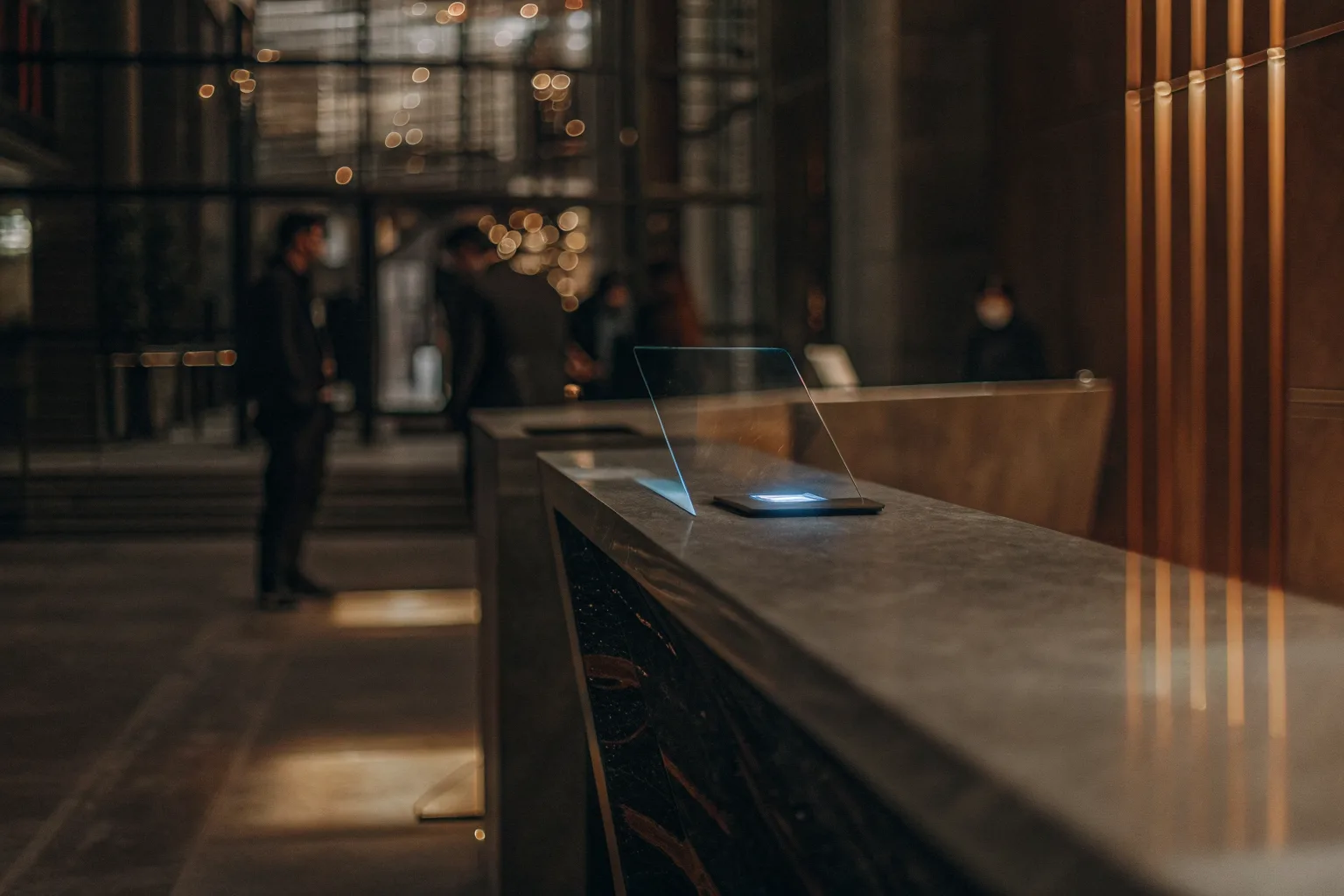
The next two years will reshape hotel marketing more than the last ten combined. By 2028, the traveler typing a search into Google will be the exception, not the rule — most discovery, comparison, and even booking will be handled by autonomous AI agents acting on a guest's behalf. Hotels that are still optimizing purely for human eyeballs will lose visibility to properties that have rebuilt their marketing stack for a world of agentic AI, owned data, and radical transparency. Here is what that world looks like, and how to get your property ready for it.
By 2028, a growing share of trip planning will start with a prompt to a personal AI agent, not a search engine query. That agent researches destinations, compares properties, reads reviews, and shortlists options before a human ever sees a hotel name. Winning that invisible research phase requires marketing content built for machines to parse, trust, and recommend — not just for humans to scroll past.
Schema markup, clean semantic HTML, and clearly labeled amenities, policies, and pricing let AI agents extract accurate facts about your property instead of guessing from marketing copy.
Content written to directly answer the specific questions travelers ask their AI assistants — cancellation policy, pet rules, distance to the airport — earns citations inside AI-generated answers.
AI agents cross-reference your website, OTA listings, Google Business Profile, and review platforms. Inconsistent information anywhere reduces the confidence score an agent assigns your property.
Press mentions, verified review volume, and backlinks from reputable hospitality and travel sources feed the same trust signals large language models weigh when deciding what to recommend.
Live availability, current rates, and accurate amenity data delivered through structured feeds keep your property eligible for AI recommendations that update by the hour, not the season.
Discovery is only half the shift. Once an AI agent shortlists your property, 2028 travelers increasingly let that same agent complete the booking — checking real-time availability, applying loyalty preferences, and confirming the reservation without the guest ever opening a browser tab. Properties that cannot transact with an agent in real time simply get skipped in favor of one that can.
Direct booking engines exposed through clean, documented APIs let AI agents check availability and confirm a reservation programmatically, the same way a human would click through a checkout flow.
Any lag between your PMS and what an agent sees erodes trust fast. Real-time inventory sync keeps your property bookable the moment it is recommended, not minutes later.
Machine booking rewards properties that can instantly apply the right rate for a guest's known preferences, loyalty tier, or travel history without manual intervention.
Tokenized, agent-compatible payment flows let a booking complete in one automated step instead of forcing a guest back into a manual checkout to finish the transaction.
Booking confirmations formatted for both agent parsing and human readability keep the guest informed while the agent itself can verify the reservation succeeded correctly.
Complex requests — group bookings, custom packages, special occasions — should route seamlessly from the AI agent to a human team member, not dead-end the transaction.
As AI agents intermediate more of the guest journey, third-party cookies and rented OTA audiences become even less reliable than they are today. The properties that thrive in 2028 will be the ones that built a genuine first-party data ecosystem years earlier — direct relationships with guests that no algorithm change or platform policy can take away.
“The hotels that own their guest data will train the AI agents recommending them. The hotels that only rent audience data will be recommended by someone else's algorithm — on someone else's terms.”
Building that ecosystem starts well before 2028:
As transactional booking becomes automated, the emotional case for choosing one property over another moves further upstream — into storytelling that makes a destination and a property feel irreplaceable before an AI agent even presents the option. Generic amenity lists will not differentiate a property in 2028. Immersive, place-specific narrative will.
Content built around the specific street, market, or coastline your property sits on — not generic destination copy — gives AI agents and guests a reason to choose your location specifically.
Short-form video and interactive 3D tours that capture the sensory experience of a property and its surroundings convert far better than static photography alone.
User-generated content showing real guests experiencing the local culture around your property builds authentic proof that stock imagery cannot replicate.
Stories told by local staff, chefs, and guides about their neighborhood create a sense of place and access that no algorithm can fabricate — and that guests remember.
Content that helps guests and their AI agents build a real itinerary around your property — pairing your rooms with nearby experiences — extends your influence beyond the stay itself.
Storytelling tied to local festivals, seasons, and traditions keeps content fresh and gives guests a specific, time-bound reason to book now rather than someday.
Vague green claims will not survive contact with 2028's AI-mediated booking process. When an agent is comparing properties on behalf of a sustainability-conscious guest, it will weigh verifiable, third-party-audited metrics over marketing language. “Eco-friendly” as a slogan gets ignored; a published carbon-per-stay figure gets cited.
Building a defensible sustainability profile means moving from claims to data:
These five shifts compound each other. Autonomous AI discovery depends on structured, trustworthy content. Machine booking depends on real-time systems that back that content up. Owned first-party data fuels the personalization that makes both of those channels worth investing in. Immersive storytelling gives an AI agent — and the guest behind it — an emotional reason to choose you once the transactional bar has been cleared. And verifiable sustainability metrics increasingly decide close calls between comparable properties. None of this is optional infrastructure for “someday” — it is the marketing stack forward-thinking properties are already building in 2026.
A practical starting point for each pillar:
2028 is closer than it feels. The properties that will win in an agentic AI travel landscape are not the ones scrambling to react once the shift is obvious — they are the ones building structured content, owned data, real-time systems, and authentic storytelling right now, while the change is still gradual enough to get ahead of it.
Start with whichever pillar exposes your biggest gap today, build the underlying infrastructure with discipline, and treat the rest as a roadmap rather than a wish list. The hotels that own their data, their systems, and their story will be the ones AI agents recommend — and the ones guests remember.
Let's put the AI discovery, first-party data, and storytelling infrastructure in place before the market demands it.