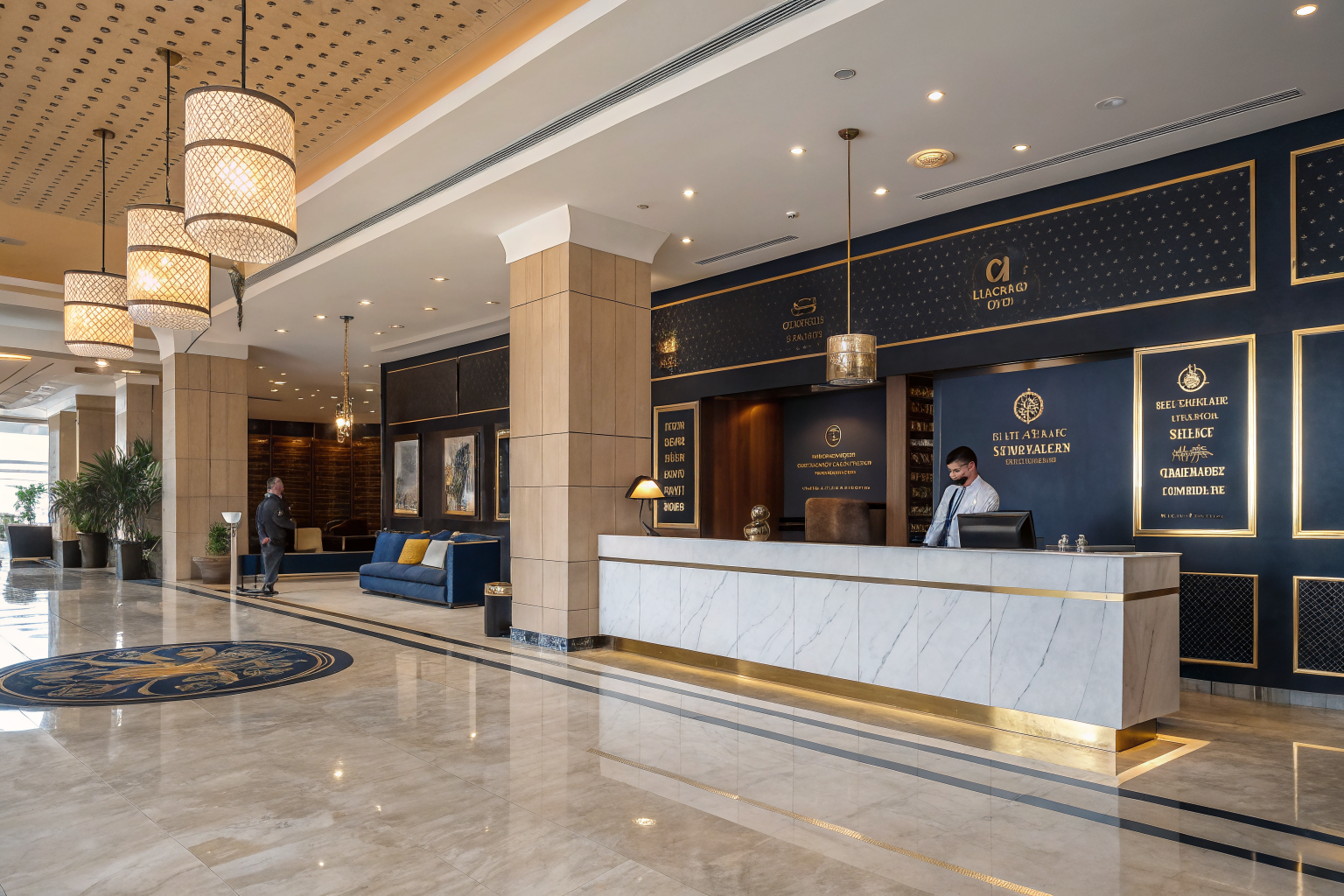
Brand consistency has emerged as a crucial factor for success in the hospitality industry. With numerous competitive options available to travelers and diners, hospitality businesses must develop a recognizable and unified brand presence to drive growth, build meaningful customer relationships, and stand out in a crowded marketplace. Every touchpoint — from your website to your lobby to your staff's tone of voice — contributes to how guests perceive and remember your property.
1. Building Trust and Credibility
A consistent brand image demonstrates professionalism throughout every level of your hospitality operation. When guests encounter uniform branding across all touchpoints — from your website and social media profiles to your signage, menus, and in-room materials — it conveys authenticity and quality. This reliability encourages repeat business and positive referrals by assuring customers of dependable service standards regardless of which property they visit or which platform they use to engage with your brand.
Inconsistency, by contrast, introduces doubt. A guest who sees a polished website but encounters mismatched decor, inconsistent service, or different messaging on social media begins to question the reliability of the entire experience. Trust is earned through consistency — and in hospitality, trust directly drives booking decisions.
2. Enhancing Customer Recognition
Visual consistency — through logos, color schemes, typography, and photography style — reinforces brand identity in competitive markets. In hospitality, where travelers evaluate dozens of options in a single search session, visual recognition can be the deciding factor that draws a potential guest back to your property.
Frequent, consistent brand exposure across channels increases customer recall and influences booking decisions. This is particularly important in hospitality where first impressions matter enormously. A traveler who repeatedly encounters your brand — in search results, on social media, through email campaigns, and in travel magazines — builds an unconscious familiarity that makes choosing your property feel natural and low-risk.
3. Streamlining Marketing Efforts
Cohesive branding provides frameworks that reduce creative debates and improve team efficiency. When your brand guidelines are clear and well-documented, your marketing team spends less time debating whether a headline fits the brand voice or which color palette applies to a particular campaign. Instead, they can move faster and execute more campaigns with the same resources.
Staff TrainingEstablished brand guidelines simplify onboarding and ensure every team member understands how to represent the property — from front desk greetings to social media responses.
Partner IntegrationWhen working with agencies, photographers, or freelancers, clear brand standards ensure external collaborators produce work that matches your existing materials without extensive revision cycles.
Scalable CampaignsConsistent brand frameworks allow marketing campaigns to scale across platforms and markets without losing coherence — essential for multi-property hotel groups.
4. Boosting Customer Loyalty and Retention
Consistent branding creates the familiarity that encourages repeat visits. When guests know exactly what to expect from your property — the aesthetic, the service tone, the quality standards — they feel confident returning. Surprises in hospitality are only welcome when they exceed expectations; inconsistency that disappoints erodes loyalty permanently.
Uniform brand experiences across websites, apps, and in-person services build emotional connections that strengthen loyalty programs. A guest who recognizes your brand DNA in every interaction — from the booking confirmation email to the welcome card in their room — develops a relationship with your property that goes beyond a transactional stay. That emotional connection is what drives them to choose you again and recommend you to others.
5. Facilitating Effective Communication
Brand consistency ensures unified messaging across social media, email campaigns, and customer service channels. When your communication style, tone, and visual identity are consistent, guests develop accurate expectations of what your property offers — managing those expectations before they arrive and minimizing the gap between what was promised and what is delivered.
Consistent communication also conveys company values clearly. Whether your brand positioning emphasizes sustainability, luxury, family-friendliness, or adventure, guests need to encounter that message repeatedly across multiple touchpoints for it to register as a genuine brand attribute rather than marketing copy.
6. Differentiating from Competitors
In saturated hospitality markets, brand differentiation is one of the most powerful competitive advantages available. Unique, consistently-applied brand elements — including visual design, tone of voice, storytelling, and the values you communicate — help your property stand out in a sea of similar offerings.
Visual Design
A distinctive color palette, logo, and design language applied consistently across every touchpoint creates immediate recognition in search results and on social media.
Tone of Voice
Whether your brand is warm and conversational, sophisticated and understated, or adventurous and bold, consistent voice builds personality that guests connect with emotionally.
Storytelling
Properties that tell a consistent story — about their history, their values, their location, or their people — create narrative depth that generic competitors lack.
Service Promise
A consistently-communicated service promise gives guests a clear reason to choose you: they know what your property stands for before they arrive.
7. Adapting to Digital Platforms
Maintaining brand integrity across mobile apps, social media platforms, and emerging technologies like virtual reality requires deliberate planning. Each platform has its own format requirements and audience expectations — but your core brand identity must remain consistent regardless of the medium.
A guest who discovers your property through an Instagram Reel, books through your mobile app, receives a confirmation via email, and checks in through a digital kiosk should encounter the same brand personality at each step. Seamless experiences across digital and physical channels build the kind of trust that justifies premium pricing and generates loyal advocates.
8. Measuring the Impact of Brand Consistency
Clear brand guidelines enable meaningful tracking of performance. When your brand presentation is consistent, changes in key metrics can be attributed to marketing strategy and execution rather than brand confusion. Key performance indicators to monitor include:
- Brand awareness metrics — unaided and aided recall in your target markets
- Social media engagement rates across platforms and content types
- Direct booking percentage as a measure of brand preference over OTA dependency
- Guest loyalty program enrollment and return visit frequency
- Net Promoter Score and review sentiment trends over time
- Website conversion rates and time-on-site as indicators of brand resonance
How to Build and Maintain Brand Consistency
Achieving brand consistency across a hospitality operation requires a documented brand identity system and the organizational discipline to apply it. Start with a comprehensive brand guide covering your visual identity (logo usage, color palette, typography), voice and tone guidelines, photography standards, and messaging framework.
Conduct regular brand audits across all channels — website, social media, printed collateral, in-property signage, staff uniforms, and email templates — to identify inconsistencies and correct them. Train all guest-facing staff on brand standards, not just visual guidelines but the personality and values your brand represents.
For multi-property groups, establish central brand governance processes that allow local customization within defined parameters — ensuring each property maintains its individual character while contributing to a unified brand family.
Conclusion
Brand consistency is not a luxury for established hotel chains — it is a fundamental requirement for any hospitality business competing in today's digital marketplace. From building guest trust and recognition to streamlining marketing operations and driving loyalty, the benefits of a consistent brand compound over time.
Invest in developing clear brand guidelines, train your team to embody them, audit your execution regularly, and measure the results. Properties that commit to brand consistency build stronger reputations, more loyal guest bases, and more resilient businesses that weather competitive pressures and market shifts with greater confidence.